
Jul 21, 2026News Center
Cisco Catalyst vs Nexus Switches: Differences, Features & Use Cases
Learn the differences between Cisco Catalyst and Nexus switches, including features, applications, compatibility with SFP/QSFP transceivers, and how to choose the right Cisco switch for your network.
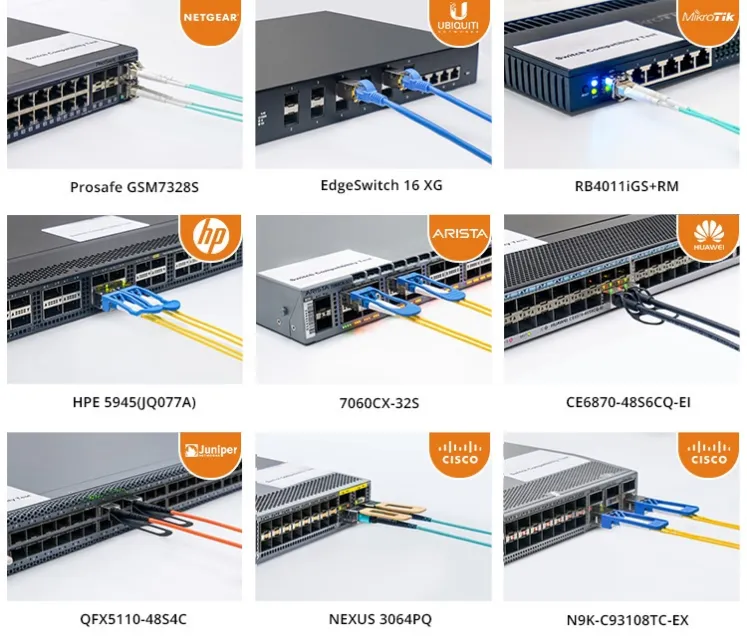
Cisco Catalyst vs Nexus Switches: Which Cisco Switch Should You Choose for Enterprise and Data Center Networks?
When designing or upgrading a network infrastructure, choosing the right Cisco switch platform is one of the most important decisions.
Cisco offers many switching solutions, but two product families are widely deployed:
- Cisco Catalyst Switches
- Cisco Nexus Switches
Although both platforms provide high-performance Ethernet connectivity, they are designed for different environments.
Cisco Catalyst switches are mainly built for enterprise campus networks, while Cisco Nexus switches are optimized for data centers, cloud environments, and high-density server networks.
Understanding the differences between Cisco Catalyst and Nexus switches helps network engineers select the right hardware, optical transceivers, and network architecture for long-term scalability.
What Are Cisco Catalyst Switches?
Cisco Catalyst is Cisco’s flagship enterprise switching platform designed for:
- Office networks
- Campus networks
- Branch locations
- Enterprise access and distribution layers
Popular Cisco Catalyst models include:
- Cisco Catalyst 2960 Series
- Cisco Catalyst 3560 Series
- Cisco Catalyst 3850 Series
- Cisco Catalyst 9300 Series
- Cisco Catalyst 9400 Series
- Cisco Catalyst 9500 Series
Typical applications:
✅ User access switches
✅ IP phones and PoE devices
✅ Wireless access points
✅ Enterprise LAN networks
✅ Campus backbone connections
For example:
A large enterprise office may deploy:
- Catalyst 9300 switches at the access layer
- Catalyst 9500 switches as the campus core
- Cisco SFP-10G-SR or SFP-10G-LR modules for uplinks
What Are Cisco Nexus Switches?
Cisco Nexus switches are designed specifically for:
- Data centers
- Cloud infrastructure
- Server-to-server communication
- High-performance computing environments
Popular Cisco Nexus models include:
- Cisco Nexus 3000 Series
- Cisco Nexus 5000 Series
- Cisco Nexus 7000 Series
- Cisco Nexus 9000 Series
Common deployments:
✅ Leaf-spine architectures
✅ Data center aggregation
✅ Enterprise private cloud
✅ Network virtualization
✅ High-bandwidth server connections
For example:
A modern data center may use:
- Cisco Nexus 9300 as leaf switches
- Cisco Nexus 9500 as spine switches
- 100G QSFP28 or 400G QSFP-DD optical modules for high-speed connections
Cisco Catalyst vs Nexus: Key Differences
1. Target Applications
The biggest difference is the environment they are designed for.
Cisco Catalyst
Best for:
- Enterprise users
- Offices
- Campuses
- Branch networks
Cisco Nexus
Best for:
- Data centers
- Cloud providers
- Large-scale server environments
Simple rule:
Campus network → Catalyst
Data center network → Nexus
2. Network Architecture Differences
Cisco Catalyst Architecture
Traditional enterprise networks usually follow:
Access → Distribution → Core
Example:
PCs / Phones
↓
Catalyst 9300
↓
Catalyst 9500 Core Switch
Cisco Nexus Architecture
Modern data centers commonly use:
Leaf → Spine Architecture
Example:
Servers
↓
Nexus 9300 Leaf Switch
↓
Nexus Spine Network
This architecture provides:
- Lower latency
- Higher bandwidth
- Better scalability
3. Operating System Differences
Cisco Catalyst switches traditionally run:
Cisco IOS / IOS XE
Advantages:
- Familiar enterprise management
- Strong routing features
- Wide administrator experience
Cisco Nexus switches run:
Cisco NX-OS
Advantages:
- Designed for data centers
- Better virtualization support
- Advanced automation capabilities
4. Performance and Port Speeds
Cisco Catalyst platforms typically support:
- 1G Ethernet
- 10G uplinks
- 25G uplinks
- 40G models
Common optical modules:
- Cisco GLC-SX-MMD
- Cisco GLC-LH-SMD
- Cisco SFP-10G-SR
- Cisco SFP-10G-LR
- Cisco SFP-25G-SR
Cisco Nexus platforms commonly support:
- 10G
- 25G
- 40G
- 100G
- 400G
- 800G
Common optical modules:
- QSFP-40G-SR4
- QSFP-40G-LR4
- QSFP-100G-SR4
- QSFP-100G-LR4
- QSFP-100G-DR
- QSFP-DD-400G modules
- OSFP-800G modules
Cisco Catalyst vs Nexus Optical Transceiver Compatibility
Choosing the correct optical module is critical for both Catalyst and Nexus deployments.
Common issues engineers face:
- Unsupported transceiver alarms
- EEPROM mismatch
- Incorrect wavelength
- Fiber type mismatch
- Distance limitation
For example:
Cisco Catalyst 9300 + SFP-10G-SR
Recommended for:
- Short-distance enterprise uplinks
- Multimode fiber
- Data center access connections
Cisco Nexus 9300 + QSFP-100G-SR4
Recommended for:
- Data center leaf-spine connections
- Short-range 100G links
Cisco Nexus 9000 + QSFP-DD-400G
Recommended for:
- AI infrastructure
- Cloud data centers
- High-performance computing
Compatible optical modules should be coded according to Cisco requirements and tested before deployment.
How to Choose Between Cisco Catalyst and Nexus Switches?
Use Cisco Catalyst if you need:
✅ Enterprise LAN connectivity
✅ User access switching
✅ PoE devices
✅ Campus networking
Choose Cisco Nexus if you need:
✅ Data center networking
✅ High bandwidth servers
✅ Leaf-spine architecture
✅ Cloud infrastructure
Cisco Catalyst vs Nexus: Application Scenarios
Scenario 1: Enterprise Office Network
Requirement:
- 500 employees
- IP phones
- Wireless access points
- Office computers
Recommended:
Cisco Catalyst 9300
Optical modules:
- GLC-SX-MMD
- SFP-10G-SR
Scenario 2: Enterprise Data Center
Requirement:
- Virtual servers
- Storage systems
- High-speed east-west traffic
Recommended:
Cisco Nexus 9300
Optical modules:
- QSFP-100G-SR4
- QSFP-100G-LR4
Scenario 3: AI / Cloud Data Center
Requirement:
- GPU servers
- Massive bandwidth
- Low latency
Recommended:
Cisco Nexus 9000 + 400G/800G optics
Optical modules:
- QSFP-DD-400G
- OSFP-800G
FAQ: Cisco Catalyst vs Nexus Switches
1. What is the main difference between Cisco Catalyst and Nexus?
Cisco Catalyst switches are designed mainly for enterprise campus networks, while Cisco Nexus switches are optimized for data centers and cloud environments.
2. Can Cisco SFP modules work on both Catalyst and Nexus switches?
Some Cisco optical modules may support both platforms, but compatibility depends on switch model, software version, and module coding.
3. Which is better, Cisco Catalyst or Nexus?
Neither is universally better.
Catalyst is better for enterprise LAN environments.
Nexus is better for data centers requiring high bandwidth and scalability.
4. Does Cisco Nexus support 400G optical modules?
Yes. Modern Cisco Nexus platforms support high-speed interfaces including 100G, 400G, and newer generations depending on the model.
5. What optical modules are commonly used with Cisco switches?
Common choices include:
- GLC-SX-MMD
- GLC-LH-SMD
- SFP-10G-SR
- SFP-10G-LR
- SFP-25G-SR
- QSFP-100G-SR4
- QSFP-100G-LR4
Conclusion: Choosing the Right Cisco Switch Platform
Cisco Catalyst and Nexus switches serve different networking requirements.
Catalyst focuses on:
- Enterprise connectivity
- Campus networks
- User access
Nexus focuses on:
- Data centers
- Cloud infrastructure
- High-speed networking
Selecting the right switch platform together with the correct optical transceiver solution helps organizations build reliable, scalable, and cost-effective networks.
Need Cisco Compatible Optical Transceivers for Catalyst or Nexus Switches?
At Sate Optics, we provide:
✅ Cisco compatible SFP, SFP+, SFP28, QSFP28, QSFP-DD, and OSFP modules
✅ 100% tested optical transceivers before shipment
✅ Compatibility coding for Cisco Catalyst and Nexus switches
✅ Solutions for enterprise networks and data centers
Contact our team to find the right optical module for your Cisco deployment.
Related Articles
1. Cisco Compatible Optical Transceivers Explained
Learn how Cisco-compatible modules work, how coding ensures compatibility, and what engineers should check before deployment.
2. Are Compatible SFP Modules Safe? Everything You Need to Know
Understand reliability, testing standards, warranty, and deployment risks of third-party optical modules.
3. Cisco GLC-SX-MMD vs GLC-LH-SMD: Complete Comparison Guide
Compare Cisco’s most popular 1G multimode and single-mode SFP modules.
4. AOC vs DAC vs Optical Transceivers: Which Solution Should You Choose?
Learn the differences between DAC cables, AOC cables, and optical modules for high-speed networks.
5. How to Troubleshoot Optical Module Problems in Fiber Networks
A practical troubleshooting guide covering power issues, compatibility alarms, and link failures.
- Cisco Catalyst vs Nexus
- Cisco Catalyst switches
- Cisco Nexus switches
- Cisco compatible transceivers
- Cisco SFP modules
- Cisco QSFP modules
- data center optical transceivers