
Aug 12, 2026News Center
QSFP28 vs QSFP-DD: What’s the Difference?
Compare QSFP28 vs QSFP-DD optical transceivers and learn the differences between 100G and 400G modules, applications, compatibility, and how to choose the right solution for data centers.
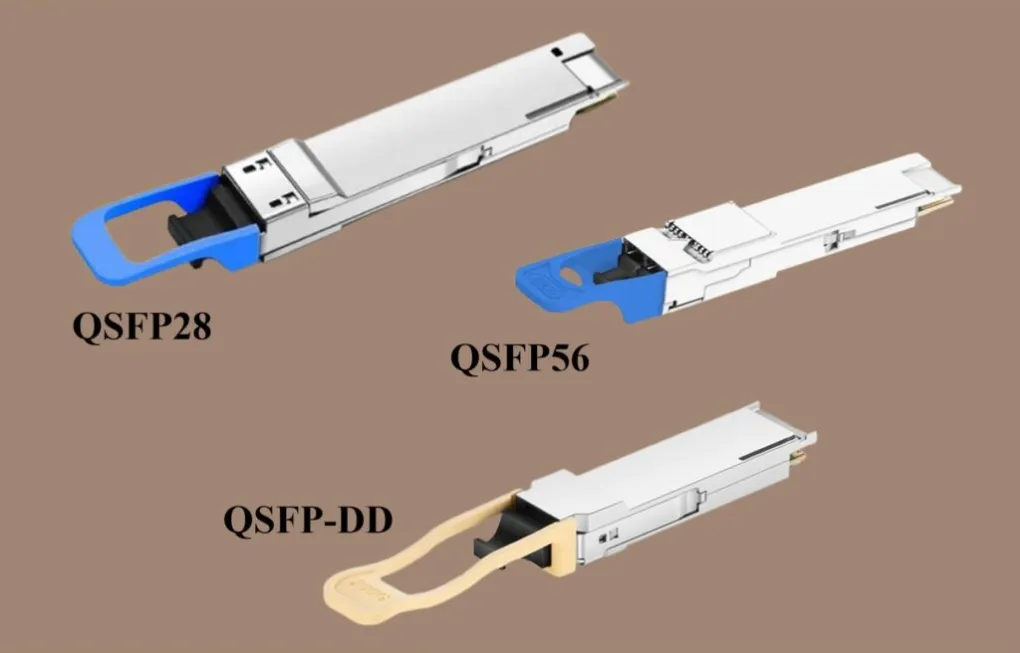
A Complete Guide to 100G and 400G Optical Transceivers
Why Are QSFP28 and QSFP-DD Compared?
As data center networks continue to grow, higher bandwidth requirements are pushing enterprises and cloud providers from 100G Ethernet toward 400G Ethernet solutions.
Two optical transceiver form factors are frequently discussed during this transition:
- QSFP28 – widely used for 100G Ethernet applications
- QSFP-DD (Double Density) – designed for high-density 400G Ethernet deployments
Although they look similar, QSFP28 and QSFP-DD are designed for different network generations, switch platforms, and bandwidth requirements.
Understanding the differences between QSFP28 vs QSFP-DD helps network engineers choose the right optical modules for data centers, AI clusters, cloud computing, and high-performance networks.
What Is QSFP28?
QSFP28 is a Quad Small Form-factor Pluggable 28 optical transceiver designed for 100Gbps Ethernet applications.
The "28" represents a maximum lane speed of approximately 28Gbps per channel.
QSFP28 typically uses:
- 4 electrical lanes
- 25Gbps NRZ modulation per lane
- Total bandwidth: 100Gbps
Common QSFP28 optical modules include:
- QSFP-100G-SR4
- QSFP-100G-LR4
- QSFP-100G-ER4
- QSFP-100G-FR
- QSFP-100G-CWDM4
Typical applications:
- Data center leaf-spine networks
- Enterprise backbone networks
- Cloud infrastructure
- High-performance computing environments
For example:
QSFP-100G-SR4 is commonly used for short-distance multimode fiber connections inside data centers, while QSFP-100G-LR4 supports longer-distance single-mode fiber links.
What Is QSFP-DD?
QSFP-DD stands for Quad Small Form-factor Pluggable Double Density.
It is designed specifically for 400G Ethernet applications.
Compared with QSFP28, QSFP-DD increases bandwidth by adding additional electrical lanes.
QSFP-DD typically uses:
- 8 electrical lanes
- 50Gbps or 100Gbps per lane depending on generation
- Total bandwidth up to 400Gbps
Common QSFP-DD modules include:
- QSFP-DD 400G SR8
- QSFP-DD 400G DR4
- QSFP-DD 400G FR4
- QSFP-DD 400G LR4
Applications include:
- AI and machine learning clusters
- Large-scale cloud data centers
- High-density spine networks
- Data center interconnect (DCI)
QSFP28 vs QSFP-DD: Key Differences
Feature | QSFP28 | QSFP-DD |
|---|---|---|
Ethernet Speed | 100G | 400G |
Electrical Lanes | 4 lanes | 8 lanes |
Typical Modulation | NRZ | PAM4 / advanced modulation |
Main Application | 100G networks | 400G networks |
Port Density | Lower | Higher |
Power Consumption | Lower | Higher |
Network Generation | Current mainstream | Next-generation data centers |
QSFP28 vs QSFP-DD: Physical Compatibility
One important advantage of QSFP-DD is backward compatibility.
QSFP-DD ports are designed to accept:
- QSFP-DD modules
- QSFP28 modules
- QSFP+ modules
This allows data centers to upgrade gradually without replacing all network equipment immediately.
For example:
A switch with QSFP-DD ports can support:
- 400G QSFP-DD optics for high-bandwidth uplinks
- 100G QSFP28 optics for existing infrastructure
This flexibility reduces migration costs and simplifies network upgrades.
Bandwidth Comparison: 100G vs 400G Networks
The biggest difference between QSFP28 and QSFP-DD is bandwidth scalability.
A traditional 100G architecture:
100G Server
↓
100G Leaf Switch
↓
100G Spine Switch
A modern 400G architecture:
400G Server
↓
400G Leaf Switch
↓
400G Spine Switch
For AI workloads, cloud computing, and large-scale data analytics, 400G networks provide:
- Higher throughput
- Lower network congestion
- Better rack scalability
- Improved data processing capability
QSFP28 Applications and Recommended Modules
1. Data Center Leaf-Spine Networks
QSFP28 remains one of the most widely deployed 100G solutions.
Recommended modules:
- QSFP-100G-SR4 for short-distance MMF links
- QSFP-100G-LR4 for long-distance SMF links
Related reading:
Learn more about 100G deployment:
100G Optical Transceivers for Data Centers
2. Enterprise Network Upgrades
Many enterprises still use 40G and 100G switching platforms.
QSFP28 provides:
- Cost-effective upgrade path
- Wide compatibility
- Mature supply chain
Common platforms include:
- Cisco Nexus switches
- Cisco Catalyst switches
- Arista data center switches
- Juniper network switches
QSFP-DD Applications and Recommended Modules
1. AI and Machine Learning Infrastructure
AI clusters require extremely high bandwidth between:
- GPU servers
- Storage systems
- Compute nodes
400G QSFP-DD modules are increasingly used because they provide:
- Higher port density
- Lower cable complexity
- Better scalability
2. Cloud Data Centers
Large cloud providers require:
- High-speed backbone networks
- Massive east-west traffic capacity
- Reliable optical connectivity
QSFP-DD 400G solutions are becoming a standard choice for next-generation data centers.
QSFP28 or QSFP-DD: Which One Should You Choose?
The right choice depends on your network requirements.
Choose QSFP28 if you need:
✓ Existing 100G infrastructure
✓ Lower deployment cost
✓ Enterprise network upgrades
✓ Compatibility with current switches
Choose QSFP-DD if you need:
✓ 400G bandwidth
✓ AI workloads
✓ Cloud-scale networking
✓ Future-proof infrastructure
Before purchasing, always check:
- Switch compatibility
- Fiber type (MMF or SMF)
- Transmission distance
- Connector type
- Coding requirements
Choosing the wrong optical module may cause:
- Unsupported transceiver alarms
- Link failures
- Poor optical performance
How Sate Optics Supports QSFP28 and QSFP-DD Deployments
Sate Optics provides compatible optical transceivers for:
- Cisco
- Juniper
- Arista
- Huawei
- HPE
- Dell EMC
- Nokia
- ZTE
Each module can be:
- Programmed according to device requirements
- Tested before shipment
- Verified for optical performance
- Supported with technical assistance
Available solutions include:
- QSFP28 100G SR4/LR4/ER4/CWDM4
- QSFP-DD 400G SR8/DR4/FR4/LR4
- DAC and AOC high-speed cables
For data center upgrades from 100G to 400G, choosing the correct optical solution is critical for network reliability.
Frequently Asked Questions (FAQ)
1. Can QSFP-DD ports support QSFP28 modules?
Yes. QSFP-DD ports are designed with backward compatibility and can support QSFP28 modules in many switch platforms.
2. Is QSFP-DD faster than QSFP28?
Yes. QSFP-DD supports up to 400G Ethernet, while QSFP28 is primarily designed for 100G Ethernet.
3. Can I replace QSFP28 with QSFP-DD directly?
Not always. The switch port, firmware, and network architecture must support QSFP-DD.
4. What fiber is used for QSFP28 and QSFP-DD?
It depends on the module.
Examples:
- SR4/SR8 → Multimode fiber
- DR4/LR4 → Single-mode fiber
5. Which is better for future data centers?
For new high-density data centers, QSFP-DD provides a better upgrade path toward 400G networking.
Conclusion
QSFP28 and QSFP-DD serve different generations of optical networking.
QSFP28 remains an excellent solution for existing 100G Ethernet networks, while QSFP-DD is designed for the next generation of 400G data centers, AI infrastructure, and cloud networks.
Understanding the differences between QSFP28 vs QSFP-DD helps organizations build scalable, reliable, and cost-effective optical networks.
Related Articles
1. 100G Optical Transceivers for Data Centers
Learn how 100G optical modules are used in modern data centers and how to select the right 100G solution.
2. How to Choose Optical Transceiver for Your Network
A practical guide covering compatibility, distance, fiber type, and application requirements.
3. AOC vs DAC vs Optical Modules: Which One Should You Choose?
Understand the differences between active optical cables, direct attach cables, and pluggable optics.
4. SFP vs SFP+ vs SFP28: Understanding Ethernet Optical Modules
Learn how optical module generations evolved from 1G to 25G networking.
5. Fortinet Compatible Transceivers Explained
Discover how compatible optical modules support enterprise security networks and firewall environments.
Ready to Upgrade Your Network to 100G or 400G?
Need help selecting the right QSFP28 or QSFP-DD optical transceiver?
Contact Sate Optics for:
✓ Device compatibility checking
✓ Customized coding
✓ Technical support
✓ Reliable optical solutions for data centers
Build your next-generation network with confidence.