
Jun 26, 2026News Center
Cisco Switches for Enterprise Networks | Complete Business Networking Guide
Learn how Cisco enterprise switches improve business networks. Compare Catalyst and Nexus series, uplink options, PoE features, and compatible optical transceivers.
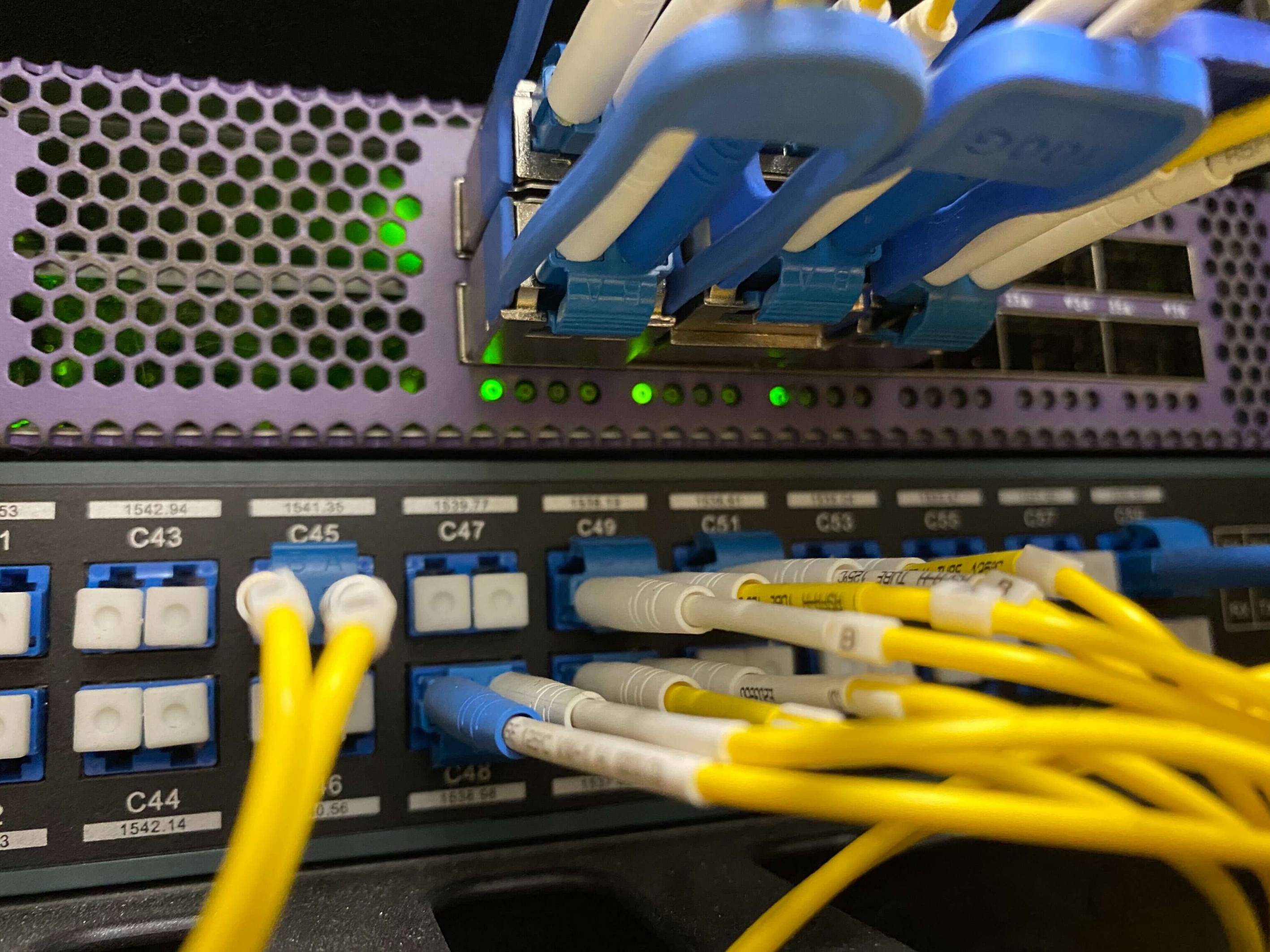
How to Choose the Right Switch for Modern Business Connectivity
In today’s digital business environment, enterprise networks are expected to handle far more than simple office connectivity. From cloud applications and IP phones to Wi-Fi 6 access points, video conferencing, cybersecurity, and AI workloads, modern networks demand higher speed, better reliability, and easier management than ever before.
This is why many businesses continue to rely on Cisco Systems enterprise switches as the foundation of their network infrastructure.
Whether you are upgrading an existing office network, building a new campus environment, or expanding a data center, choosing the right Cisco switch can significantly improve network performance, scalability, and long-term operational efficiency.
Why Enterprise Networks Still Depend on Cisco Switches
Enterprise switches are more than simple devices that connect computers together. They are responsible for traffic management, security enforcement, VLAN segmentation, PoE delivery, network redundancy, and application optimization.
Cisco switches are widely adopted because they offer:
- High reliability for 24/7 operation
- Advanced Layer 2 and Layer 3 features
- Strong security and access control
- Easy integration with enterprise environments
- Long product lifecycle and support
- Flexible scalability from small offices to large campuses
For many IT teams, Cisco equipment also provides operational consistency across branches, headquarters, and data centers.
Common Cisco Switch Series for Enterprise Networks
Cisco offers multiple switch families designed for different business scenarios. Understanding the differences helps enterprises choose the most suitable solution.
1. Cisco Catalyst 9200 Series
The Cisco Catalyst 9200 Series is designed for small and medium-sized enterprise access networks.
Key features include:
- Gigabit and multi-gigabit connectivity
- Power over Ethernet (PoE+)
- Advanced security features
- Stackable architecture
- Easy cloud and centralized management
These switches are commonly used for:
- Office access layers
- Branch deployments
- Wireless AP connectivity
- VoIP phone networks
For businesses seeking stable performance with reasonable cost control, the Catalyst 9200 series is often a practical choice.
2. Cisco Catalyst 9300 Series
The Cisco Catalyst 9300 Series is one of Cisco’s most popular enterprise switching platforms.
Compared with the 9200 series, it offers:
- Higher performance
- More uplink flexibility
- Better scalability
- Enhanced security
- Support for high-density enterprise environments
Typical applications include:
- Enterprise campus networks
- Large office buildings
- Education environments
- Healthcare institutions
- High-density wireless deployments
Many enterprises select Catalyst 9300 switches as their long-term campus switching platform because of their flexibility and future upgrade capability.
3. Cisco Nexus Series
For data center environments, the Cisco Nexus Series is widely used.
These switches are optimized for:
- High bandwidth
- Low latency
- Virtualized environments
- Cloud infrastructure
- AI and storage networking
Common use cases include:
- Data centers
- Cloud service providers
- High-performance computing
- Spine-leaf architectures
As modern applications demand faster east-west traffic processing, Nexus switches have become increasingly important in enterprise data center design.
Key Factors When Choosing Enterprise Switches
Not every business needs the most expensive switch model. The best switch depends on your actual network requirements.
Here are several important considerations before deployment.
Port Density
Estimate both current and future device connections:
- PCs and workstations
- Wi-Fi access points
- IP cameras
- VoIP phones
- Servers and storage devices
Choosing switches with sufficient expansion capacity can reduce future upgrade costs.
PoE Requirements
Modern enterprise networks often power devices directly through Ethernet cables.
PoE support is important for:
- Wireless access points
- IP telephones
- Security cameras
- IoT devices
Higher-power devices may require PoE+ or even UPOE support.
Uplink Speed
As bandwidth demand increases, uplink interfaces become critical.
Common uplink options include:
- 1G SFP
- 10G SFP+
- 25G SFP28
- 40G QSFP+
- 100G QSFP28
Choosing the correct uplink speed helps eliminate network bottlenecks and supports future scalability.
Compatible Optical Transceivers for Cisco Switches
Optical transceivers play a major role in enterprise network connectivity.
Cisco switches support various optical module types, including:
- SFP
- SFP+
- SFP28
- QSFP+
- QSFP28
- QSFP-DD
Many enterprises now choose compatible optical transceivers instead of original branded modules because they can significantly reduce networking costs while maintaining stable performance.
Reliable compatible transceivers are commonly used for:
- Core uplinks
- Data center interconnects
- Campus backbone connections
- Long-distance fiber transmission
The key is ensuring compatibility testing, stable firmware support, and strict quality control.
Enterprise Network Trends in 2026
Enterprise networking continues evolving rapidly.
Several major trends are shaping switch deployments:
Higher Network Speeds
10G is becoming standard for enterprise uplinks, while 25G and 100G deployments continue growing in larger environments.
Wi-Fi 6 and Wi-Fi 7 Expansion
Modern wireless networks require higher switch bandwidth and increased PoE capacity.
AI Infrastructure Growth
AI applications generate significant east-west traffic inside data centers, increasing demand for low-latency switching architectures.
Simplified Network Management
Many businesses now prefer centralized or cloud-managed networking solutions to reduce operational complexity.
Original vs Compatible Cisco Optics
Many IT managers ask whether compatible optical modules are safe for Cisco switches.
In practice, high-quality compatible optics are widely deployed across enterprise networks worldwide.
Benefits include:
- Lower deployment cost
- Faster availability
- Flexible customization
- Multi-vendor compatibility
- Easier inventory management
However, quality varies significantly between suppliers. Enterprises should choose vendors that provide:
- Full compatibility testing
- Digital diagnostic monitoring (DDM)
- Stable EEPROM programming
- Lifetime technical support
- Warranty coverage
Poor-quality modules can cause network instability, interface shutdowns, or compatibility issues.
Final Thoughts
Enterprise networks are becoming faster, more complex, and more critical to business operations. Selecting the right Cisco switching platform helps organizations improve reliability, scalability, and long-term network efficiency.
From branch offices to large campus deployments and modern AI-driven data centers, Cisco switches continue to provide strong performance and flexibility for enterprise networking environments.
At the same time, choosing reliable compatible optical transceivers can help businesses optimize infrastructure costs without sacrificing network stability or performance.
As enterprise bandwidth demand continues growing, building a scalable and future-ready switching architecture becomes more important than ever.
FAQ
What is the difference between Cisco Catalyst and Nexus switches?
Cisco Catalyst switches are mainly designed for enterprise campus and office networks, while Cisco Nexus switches are optimized for data center and cloud environments.
Are compatible optical transceivers safe for Cisco switches?
Yes. High-quality compatible transceivers that are properly tested can work reliably with Cisco switches and are widely used in enterprise networks.
Which Cisco switch series is best for small businesses?
The Cisco Catalyst 9200 series is commonly used for small and medium-sized businesses because it offers strong performance, security, and scalability at a practical cost level.
Do Cisco switches support 100G networking?
Yes. Many Cisco Nexus and high-end Catalyst models support 40G, 100G, and even higher-speed networking interfaces.